
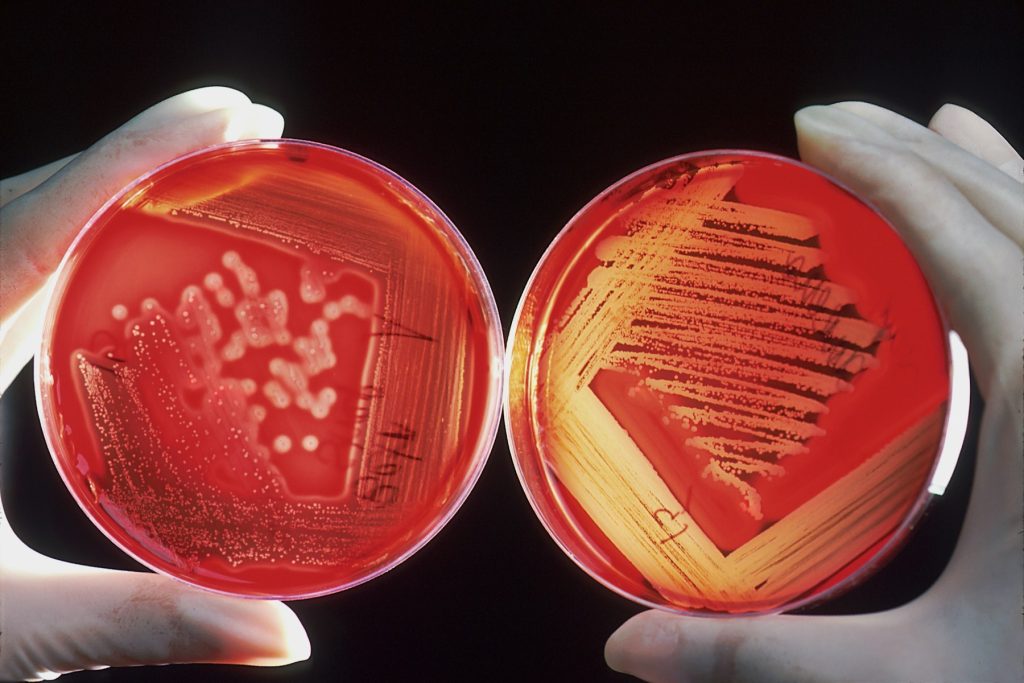
You open a jar of cream and see fuzzy spots, or a customer sends you a photo of a green film in a face mask. Mould in cosmetics is one of the most visible, most damaging problems a brand can face. This guide explains what causes it, which products are most at risk and the practical steps that prevent it.
Contents
- The short answer
- What is mould and why is it a problem?
- What causes mould in cosmetics?
- Why do preservative systems fail?
- Which products are at the highest risk?
- How do you test for mould resistance?
- The role of packaging and use
- Good manufacturing practice: stopping spores at the source
- Shelf life, PAO and labels
- What to do if you find mould
- Frequently asked questions
- Key takeaways
The short answer
Mould in cosmetics grows when moisture, nutrients and a weak preservation system meet airborne spores or contaminated ingredients, and the main defences are good manufacturing hygiene, a well-designed preservative system proven by a challenge test, suitable packaging and clear storage and shelf-life information. A product with visible mould should never be used or sold, and the batch should be investigated.
What is mould and why is it a problem?
Moulds are filamentous fungi. Their spores are everywhere: in air, dust, soil, plants and on skin. They are harmless as spores, but once they land in a product that offers water and food, they germinate and grow into visible colonies, often fuzzy white, green, black or grey spots. Besides spoiling the look and smell of the product, mould can irritate skin and eyes and cause allergic reactions, and some species can produce toxins. For that reason a mouldy cosmetic does not meet the legal requirement that a product must be safe, and it can lead to withdrawal and recall.
Read also Burkholderia cepacia in Cosmetics: Why It Causes Recalls
What causes mould in cosmetics?
Mould needs four things, and most failures involve several at once:
- Water. Creams, lotions, gels, masks, scrubs and anything with a water phase supply it. Even a small amount of free water at the surface can be enough.
- Food. Plant extracts, sugars, proteins, botanical oils, honey and clays carry nutrients that fungi love.
- A suitable pH. Moulds tolerate acidic conditions better than many bacteria, so a low pH does not protect against them.
- Spores. They arrive through raw materials, the factory air, equipment, packaging or the user’s fingers.
The preservative system is the barrier between these ingredients and a problem, so when mould appears, the first question is why the barrier failed.
Why do preservative systems fail?
- Too little preservative. Concentrations that are too low or lost through poor mixing.
- The wrong pH. Many preservatives work only in a certain pH range, so the pH has to be matched to the system.
- Interactions. Some surfactants, polymers, solids or oils bind or reduce the active preservative, leaving less available in the water phase.
- A gap in coverage. A preservative strong against bacteria may be weaker against yeasts and moulds, so the combination has to cover both.
- “Natural” shortcuts. Removing or reducing preservatives without a verified alternative is a frequent cause of failures in small brands.

Which products are at the highest risk?
Water-containing products that are opened and touched often carry the highest risk: creams in jars, face masks, scrubs, clay masks, hair masks, DIY-style kits and products containing fruit, plant or food-grade ingredients. Powders can grow mould as well if they absorb moisture, for example in a humid bathroom. Anhydrous products such as balms, oils and solid bars are far less likely to support growth, but they are not immune once water is introduced.
Read also Yeast and Mould Count in Cosmetics: Limits, Method and Results
How do you test for mould resistance?
The key test is the challenge test. It adds a defined load of reference microorganisms, including a mould, to the product and measures survivors at set points over 28 days against the criteria of ISO 11930:2019 or USP 51. A passing result shows that the formula is able to stop a mould introduced by real use. A microbiological specifications test on production batches adds a second layer: it counts yeasts and moulds in the finished product so you can detect contamination before it grows into a visible colony. The numbers are compared with limits that depend on the product category, which our guides on the total aerobic count and on category 1 and 2 explain in more detail.
The role of packaging and use
Packaging changes how easily mould spores enter. Open jars invite fingers and humidity, while airless pumps and tubes limit contact. Test the product in the pack you will actually sell; a formula that passes in a jar may need a different system in a pump, or the other way round. A stability and compatibility test checks how the product and pack behave over time, including whether the container, liner or cap affects preservation.

Good manufacturing practice: stopping spores at the source
A well-designed formula can still be overwhelmed by poor hygiene. ISO 22716 covers the basics, and in practice these steps matter most:
- Use clean, controlled water, and keep tanks, pipes and hoses dry between batches.
- Clean and sanitise vessels, spatulas, scoops and filling equipment, and dry them before use.
- Store raw materials, particularly powders, extracts and clays, in sealed containers in dry conditions.
- Limit open handling, wear hair covers and gloves, and keep the production area clean and dry.
- Control humidity in storage and in the filling room.
- Use clean packaging and keep components covered until filling.
Read also ISO 17516 Cosmetics: Microbiological Limits Explained
Shelf life, PAO and labels
Mould can appear months after filling, particularly after the consumer opens the product. The period-after-opening symbol and the date of minimum durability should be based on real data from stability and preservation studies. Clear use instructions, for example using a clean spatula, keeping the lid closed and storing away from humid conditions, help the consumer keep the product safe. Statements such as “preservative-free” are risky and need to be consistent with the facts of the formula and with local rules on claims.
What to do if you find mould
- Stop selling and using the affected batch. Quarantine stock and keep retained samples.
- Collect information. Batch number, filling date, packaging, storage conditions and the complaint details.
- Test the retained samples. Count yeasts and moulds and, if needed, identify them.
- Find the root cause. Check the preservative level, pH, raw materials, water, hygiene and packaging.
- Act on the findings. Reformulate or fix the process, then re-run the challenge test and check new batches.
- Involve the responsible person. If there is a risk to consumers, corrective action, withdrawal or recall and notification of the authority may be necessary.
Frequently asked questions
Is it safe to scrape the mould off and use the rest?
No. Visible colonies are only the surface of the problem, and the product may be contaminated throughout. Discard it.
Are natural cosmetics more likely to grow mould?
They can be, because many natural ingredients carry nutrients and microbes and because brands sometimes reduce preservatives. A natural formula needs a verified preservation system just like any other.
Can I rely on a preservative-free formula if it is anhydrous?
Often, yes, but only if the product stays free of water in real use. If water can get in, for instance from wet hands, a preservation test or an adjusted formula is wise. Ask your safety assessor.
Key takeaways
- Mould grows where water, nutrients, spores and weak preservation meet.
- Prove the formula with a challenge test and check batches with microbiological tests.
- Hygiene, dry equipment and suitable packaging stop most contamination at the source.
- Never use or sell a mouldy product, and investigate the cause before the next batch.