

Every laboratory says its results are accurate. BIPEA proficiency testing is one of the ways a laboratory can show it, with evidence from an independent organisation rather than a promise. This article explains what proficiency testing is, how a BIPEA round works, what it means for the microbiological tests your cosmetic product depends on, and what it does and does not prove, so you can read a lab’s quality claims with confidence.
Contents
- The short answer
- What is proficiency testing?
- Who is BIPEA?
- How a BIPEA round works
- What is tested in cosmetic microbiology?
- Why it matters for you
- How proficiency testing differs from accreditation
- What a good result shows, and what it does not
- How to use this when choosing a lab
- What this means at Cosmetic Testing Lab
- Frequently asked questions
- Key takeaways
The short answer
BIPEA (Bureau Interprofessionnel d’Études Analytiques, based in Paris) organises interlaboratory comparisons. It sends identical, unknown samples to many laboratories around the world. Each laboratory tests them with its routine methods and reports results, and BIPEA compares them with the expected values and with the other participants. A laboratory that takes part regularly and performs well has independent evidence that its results are reliable. Cosmetic Testing Lab takes part in BIPEA’s interlaboratory proficiency testing.
What is proficiency testing?
Proficiency testing, also called an external quality assessment or interlaboratory comparison, is a standard quality tool. Instead of a laboratory checking itself, an independent provider checks it. The sample is prepared so that all participants receive practically identical material, but nobody knows the correct answer in advance. The provider then evaluates the results statistically and sends each participant a confidential report showing how it performed. Providers of such schemes are expected to follow the international standard ISO/IEC 17043, and some are accredited to it.
Read also Cosmetic testing process in Cosmetic Testing Lab (from start to finish)
Who is BIPEA?
BIPEA is a French organisation that has run analytical comparison schemes for many years, mostly in food, agriculture, environment and related fields, and also in cosmetics. According to its own information, it is accredited by COFRAC, the French accreditation body, for ISO/IEC 17043 for a range of schemes, and it reports a very large number of participating laboratories worldwide. Listings of cosmetic proficiency tests by independent databases show BIPEA schemes for the microbiology of cosmetic products. Check BIPEA’s current catalogue for the exact schemes and accredited scope, because they change over time.

How a BIPEA round works
- Samples arrive. The laboratory receives coded samples. What they contain, and at what level, is not disclosed.
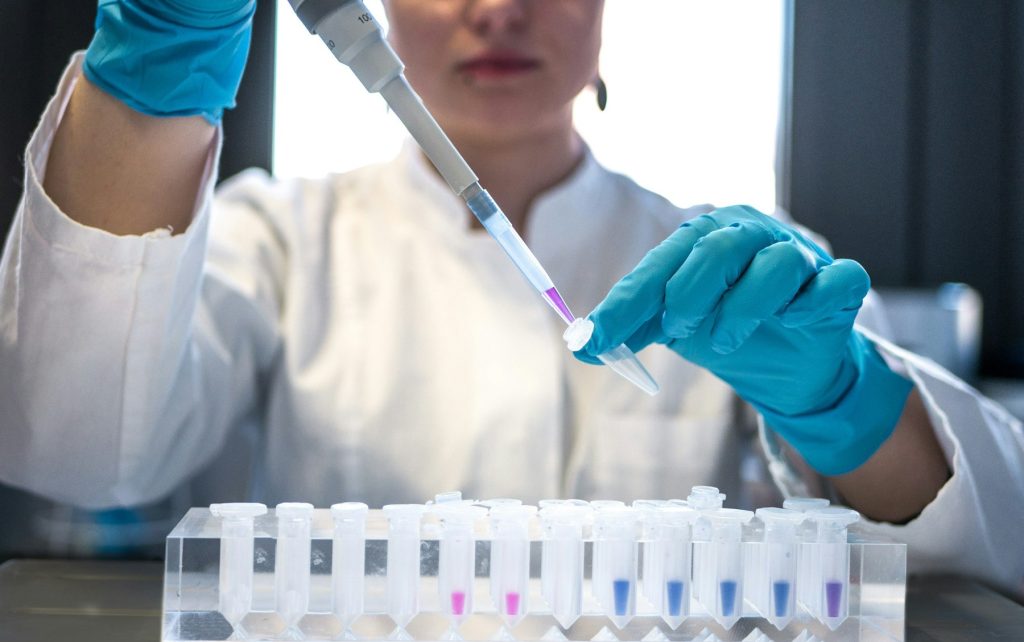
- Routine testing. The laboratory tests the samples as it would test a customer sample, with its normal methods, staff and equipment. This matters, because the aim is to see everyday performance, not a special effort.
- Results are reported. The lab submits its findings within a deadline: which microorganisms were found, and how many.
- Statistical evaluation. BIPEA compares each result with the assigned value and with the group. Many schemes express this as a score showing how far the laboratory is from the consensus.
- Report and follow-up. The laboratory receives a report. If a result is questionable, the laboratory is expected to investigate the cause and correct it.
What is tested in cosmetic microbiology?
The listed cosmetic microbiology schemes cover typical tests of a microbiological specifications test: counting mesophilic aerobic bacteria, yeasts and moulds, and detecting specified microorganisms such as Escherichia coli, Staphylococcus aureus and Pseudomonas aeruginosa. These are the same groups that ISO methods for cosmetics target, and they are what a safety assessor looks at when judging microbiological quality. According to the provider’s announcements, BIPEA has also introduced a round for the cosmetic microbial challenge, which relates to the preservation tests behind a challenge test. Check the current catalogue for details.
Read also How to Choose a Cosmetic Testing Lab: A Practical Guide
Why it matters for you
You do not see inside a laboratory. You send a sample and you receive a report. Proficiency testing gives you a way to ask, “how do you know your counts are right?” and get a concrete answer. Microbiological methods are biological and variable, which makes independent checks especially valuable. A wrong count can lead to two types of damage: a false pass that lets a contaminated product reach consumers, or a false fail that costs you time, money and a delayed launch.
Reliable results are also the basis of the CPSR. The safety assessor builds the conclusion on your data, and the data are only as good as the lab.
How proficiency testing differs from accreditation
They answer different questions, and they work well together:
- Accreditation (ISO/IEC 17025) is an assessment of the laboratory’s system, staff, methods and equipment by an accreditation body, for a defined scope.
- Proficiency testing is a test of actual results on blind samples at a point in time.
Accredited laboratories are normally expected to take part in proficiency testing. A laboratory that is not accredited can still use it as independent evidence of accuracy. The two are complementary and neither replaces internal quality control.
What a good result shows, and what it does not
A good performance shows that, on that sample and that day, the laboratory’s method gave results in line with the consensus. Taken over several rounds, it builds a track record. It does not prove that every test of every product is correct. Your product may behave differently from the proficiency sample, because ingredients can interfere with microbial recovery. This is why laboratories also validate their methods for the product type, neutralise preservatives where needed and use controls in each run. Look for laboratories that take part regularly, not once, and that act on their results.
Read also How to Send Cosmetic Samples to a Lab: A Step-by-Step Guide
How to use this when choosing a lab
- Ask which proficiency schemes the laboratory takes part in, and how often.
- Ask for evidence, such as a participation certificate, and check the period it covers.
- Check that the scheme matches the tests you order, for example cosmetic microbiology.
- Ask what the lab does when a result falls outside the acceptable range.
- Combine this with other checks: signed reports, named standards and a clear method description.
What this means at Cosmetic Testing Lab
We take part in BIPEA’s interlaboratory proficiency testing, and our BIPEA certificate for 2023–2026 is shown on our website. For you, this means that the microbiological specifications test, delivered about 5 days after we receive your samples, and the challenge test under ISO 11930:2019 or USP 51, which takes 28 days, are produced by a laboratory that benchmarks itself against others. Each result is delivered as a signed PDF report you can use in the CPSR and the product information file. We offer free DHL pickup of samples from your door. We do not give legal advice, so confirm with your assessor what evidence they need.
Frequently asked questions
Is BIPEA proficiency testing the same as accreditation?
No. Proficiency testing checks results on blind samples; accreditation assesses the whole system of a laboratory. They complement each other.
Does a laboratory pass or fail a proficiency round?
Results are evaluated against the assigned value and the group, usually as a score. A result outside the acceptable range prompts an investigation and corrective action rather than just a label.
Can I see my lab’s proficiency results?
Reports are confidential to the participant, but a laboratory can show a participation certificate and explain how it responds to results.
Key takeaways
- BIPEA proficiency testing sends blind samples to many laboratories and compares their results independently.
- It shows real, everyday accuracy and complements ISO 17025 accreditation.
- One good round is not a guarantee; regular participation and corrective action count.
- Ask any lab which schemes it uses, how often, and what it does with the results.